

Academy > Market Structure
Market Structure Explained
Academy->Market Structure Explained
Market structure is the relationship between buyers and sellers in the options market. Rather than looking at a single number, market structure examines how different pieces of information work together to help traders better understand current market conditions. It doesn't predict what will happen next.
Instead, it provides context that can help traders make more informed decisions.
Why Is Market Structure Important?
Every option chain contains thousands of numbers.
Looking at one number by itself rarely tells the complete story.
Market structure encourages traders to consider several factors together, such as:
- Open Interest
- Put Walls
- Call Walls
- Max Pain
- Current stock price
- Strike prices
- Expiration date
Each provides a different piece of the puzzle.
Understanding the Bigger Picture
Imagine a stock trading at $18.25.
The option chain shows:
- A large Put Wall at $18.00
- A large Call Wall at $20.00
- Max Pain near $19.00
Instead of focusing on just one of these values, market structure asks: How do these levels relate to each other? Looking at the information together provides a better understanding of where buyers and sellers have concentrated their positions.
Does Market Structure Predict Stock Prices? No. Market structure is not a prediction tool. Markets can and do move unexpectedly. Instead, market structure helps traders understand where important option activity exists and how it may influence price movement or trader behaviour. It should be viewed as one part of the decision-making process, not a guarantee of future results.
Using Market Structure
Many traders combine market structure with other information, including:
- Trading strategy
- Strike selection
- Premium
- Risk tolerance
- Technical analysis
- Fundamental analysis
No single indicator should determine a trading decision. The goal is to understand the market more completely before entering a position.
OptionLogic in Practice
OptionLogic brings together several market structure concepts—including Put Walls, Call Walls, and Max Pain—so traders can view them alongside live option chain data.
Rather than presenting these values as predictions, OptionLogic uses them to provide additional context that may help traders evaluate potential opportunities.
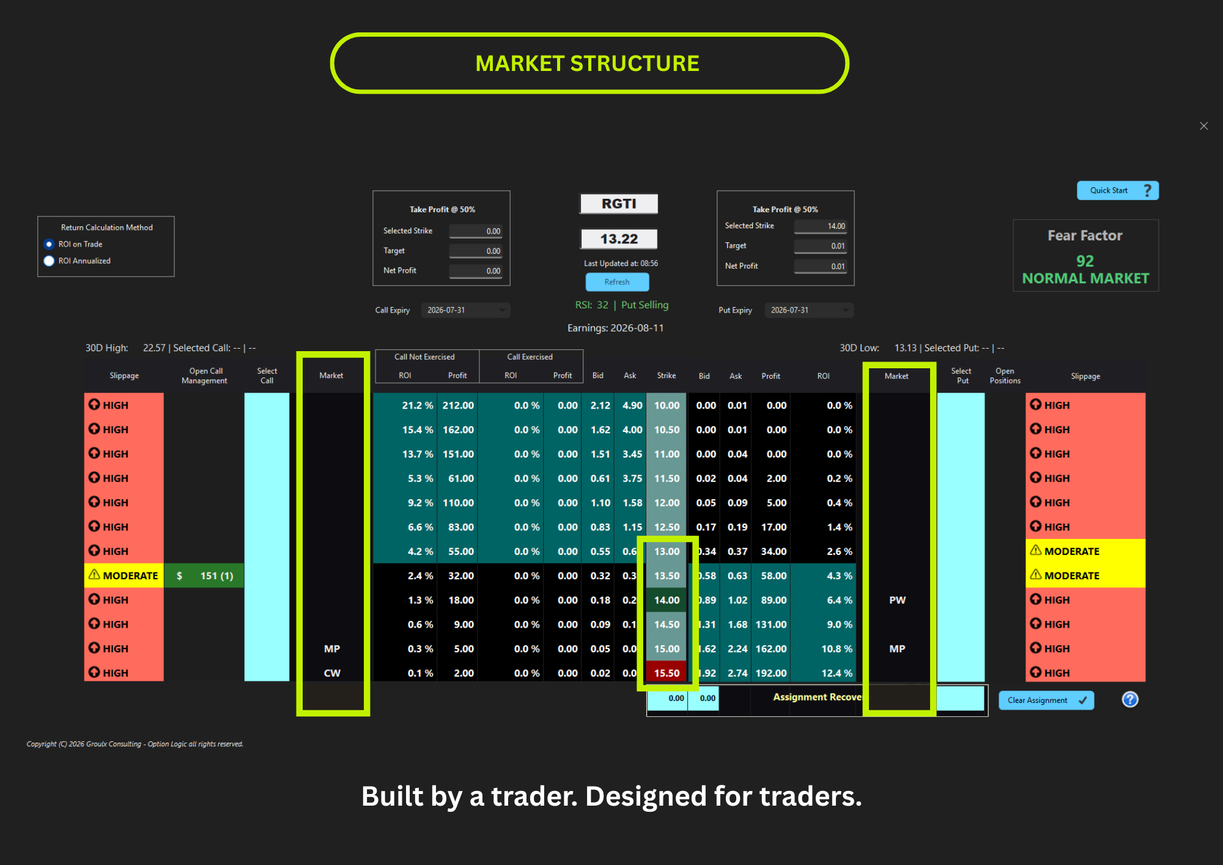
In OptionLogic Market Structure is displayed in the Market columns for both the Puts and Calls. Max Pain (MP) , Call Wall (CW) and Put Wall (PW)
Market structure doesn't tell you what the market will do. It helps you understand the environment you're trading in.
Frequently Asked Questions
What is market structure?
Market structure is the relationship between different indicators that help traders better understand activity within the options market.
Does market structure predict the future?
No. Market structure provides context, not certainty. Unexpected news, earnings, and market events can always change price direction.
What information is used in market structure?
Common market structure concepts include Open Interest, Put Walls, Call Walls, Max Pain, strike prices, and the current stock price.
Should I trade based on one market structure indicator?
No. Most traders consider several factors together before making a trading decision.
How does OptionLogic use market structure?
OptionLogic displays several market structure concepts together, helping traders evaluate the relationship between them instead of relying on a single indicator.
Continue Learning