

Academy > Option Strategies
Rolling Covered Calls
Academy->Rolling Covered Calls
Rolling a covered call means buying back your current call option and selling another covered call with a different expiration date, strike price, or both.
Many traders roll covered calls to collect additional premium, adjust their position, or continue generating income while holding their shares. Rolling is a position management strategy—not a guarantee of better results.
Why Do Traders Roll Covered Calls?
There are several reasons a trader may roll a covered call:
- Collect additional premium.
- Extend the trade by moving to a later expiration.
- Move to a higher strike price.
- Reduce the chance of assignment.
- Continue generating income from owned shares.
The best choice depends on your goals and the current position.
An Example:
Suppose you sold a covered call with:
- Strike Price: $20.00
- Expiration: This Friday
The stock is trading at $19.90, and you'd like to continue holding your shares. You buy back the current covered call and immediately sell a new covered call with a later expiration. This extends the position and may generate additional premium.
Is Rolling Always the Best Choice? No. Rolling is only one possible decision.
Depending on your position, you may instead choose to:
- Let the option expire.
- Accept assignment.
- Buy back the option and keep your shares.
- Sell a new covered call after expiration.
Every position is different.
What Should You Consider?
Before rolling a covered call, many traders evaluate:
- Current cost basis.
- Premium available.
- Time remaining until expiration.
- Current stock price.
- Assignment risk.
- Overall position performance.
Looking at the complete position often provides better insight than focusing on premium alone.
OptionLogic in Practice
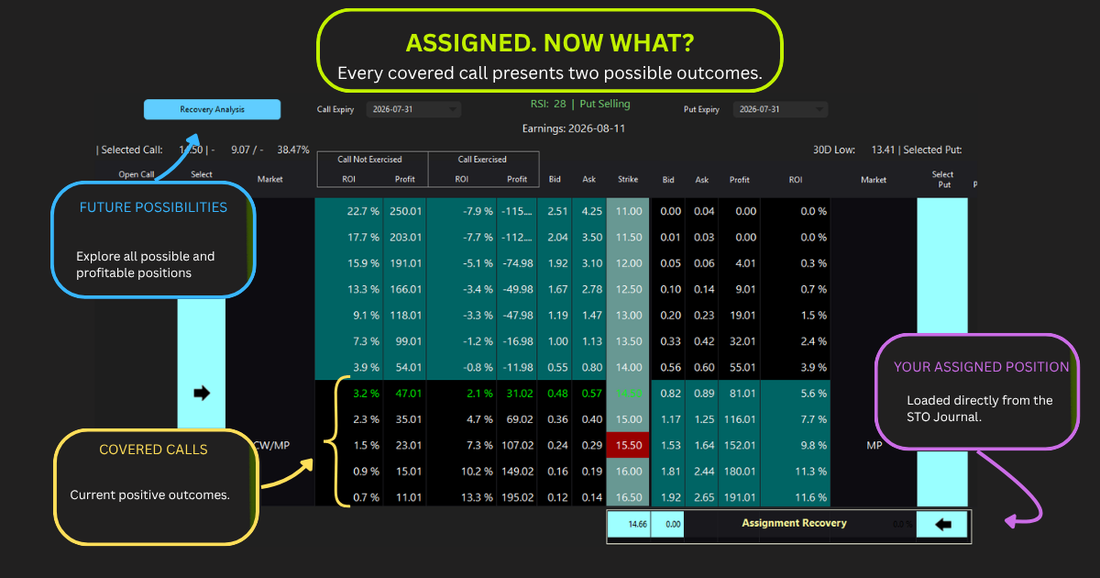
OptionLogic helps traders evaluate their current position by tracking cost basis, premiums collected, current profit or loss, and potential covered call opportunities. Rather than recommending a single action, OptionLogic provides the information needed to compare possible outcomes before deciding whether rolling the position makes sense.
Frequently Asked Questions
What is a rolling covered call?
Rolling a covered call means buying back an existing covered call and selling another one with a different strike price, expiration date, or both.
Why do traders roll covered calls?
Common reasons include collecting additional premium, extending the trade, adjusting the strike price, or managing assignment risk.
Does rolling guarantee more profit?
No. Rolling changes the position but does not guarantee a better outcome.
Should every covered call be rolled?
No. Some traders allow options to expire, accept assignment, or close the position instead. The best decision depends on the current position and trading objectives.
How does OptionLogic help?
OptionLogic organizes your position information and compares covered call opportunities, helping you evaluate possible outcomes before deciding whether to roll.
Continue Learning