

Academy > Option Strategies
Buying Back Options
Academy->Buying Back Options
Buying back an option means closing a position before it expires. For option sellers, this involves purchasing the same option contract that was originally sold. Once the trade is closed, there is no further obligation under that contract. Many traders buy back options to lock in profits, reduce risk, or manage an existing position before expiration.
Why Do Traders Buy Back Options?
There are several reasons to close an option early:
- Lock in most of the premium already earned.
- Reduce the risk of unexpected market moves.
- Avoid assignment near expiration.
- Free up capital for another opportunity.
- Prepare to roll the position into a new contract.
Buying back an option is one of the most common position management techniques used by experienced option sellers.
An Example
Suppose you sold a cash-secured put and collected $150 in premium. A few weeks later, the option has declined in value and can now be bought back for $20. By closing the position early:
- You keep most of the original premium.
- You remove the remaining risk associated with the trade.
- Your capital becomes available for your next opportunity.
Many traders prefer this approach rather than waiting for the final few dollars of premium before expiration.
Is Buying Back Always the Best Choice? No. Buying back an option is only one possible decision.
Depending on the position, a trader may instead choose to:
- Allow the option to expire.
- Accept assignment.
- Roll the position to a later expiration.
- Continue holding until expiration.
The best decision depends on the current position, remaining premium, and overall market conditions.
Before buying back an option, many traders evaluate:
- Remaining premium.
- Profit already earned.
- Days remaining until expiration.
- Assignment risk.
- Current stock price.
- Opportunity to open a new trade.
Looking at the entire position often provides better insight than focusing only on the remaining premium.
OptionLogic in Practice
OptionLogic tracks open option positions, premiums collected, current position values, and overall profitability. By organizing this information in one place, OptionLogic helps traders determine whether closing an option early may be a reasonable position management decision. Rather than recommending a specific action, OptionLogic provides the information needed to compare possible outcomes before deciding.
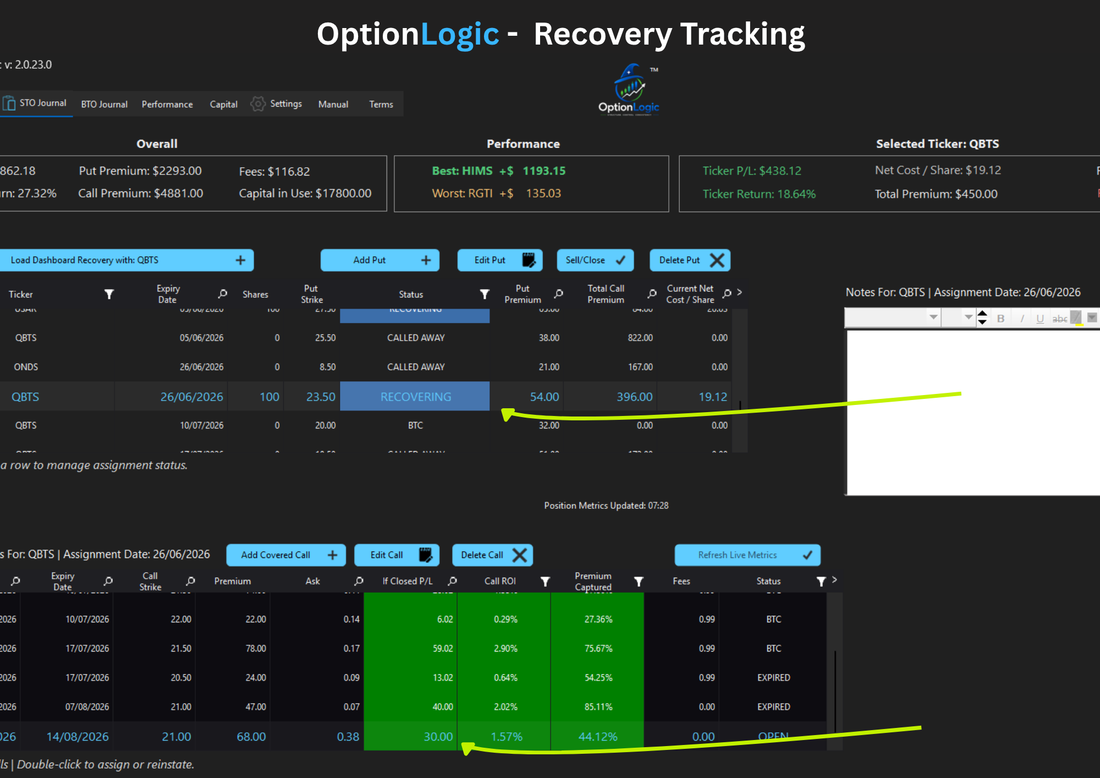
Every sold Call shows progress either green - positive amount that indicates how much can be made by buying back the sold call or red indicating a loss if buying back.
Frequently Asked Questions
What does buying back an option mean?
Buying back an option means purchasing the same option contract you previously sold, closing your position before expiration.
Why do traders buy back options early?
Common reasons include locking in profits, reducing assignment risk, freeing up capital, or preparing to open a new position.
Do you have to wait until expiration?
No. Option sellers can usually close their position at any time before expiration while the market is open.
Does buying back an option guarantee a profit?
No. Some positions are closed for a profit, while others may be closed to reduce losses or manage risk.
How does OptionLogic help?
OptionLogic tracks your positions, premiums, and current profit or loss, making it easier to evaluate whether buying back an option fits your overall trading strategy.
Continue Learning