

Academy > Reading an Option Chain
Bid vs Ask Explained
Academy->Bid vs Ask
Every option contract has two prices:
- Bid
- Ask
Understanding the difference between these two prices is important because it affects the price you receive when selling an option and the price you pay when buying one.
The bid is the highest price a buyer is currently willing to pay for an option. If you sell an option immediately using a market order, you'll usually receive a price close to the current bid.
The ask is the lowest price a seller is currently willing to accept for an option. If you buy an option immediately using a market order, you'll usually pay a price close to the current ask.
The difference between the bid and ask is called the bid-ask spread. This spread exists because buyers want to pay less, while sellers want to receive more.
The smaller the spread, the easier it is to trade near the current market price.
Why Does the Bid-Ask Spread Matter?
A wide bid-ask spread can make a trade more expensive.
For example:
- Bid: $1.00
- Ask: $1.20
If you buy at $1.20 and immediately sell, you may only receive $1.00. That difference is the spread. Options with narrow spreads are generally easier to trade because buyers and sellers are closer in price.
OptionLogic in Practice
OptionLogic displays both the bid and ask prices for every option contract.
It also calculates a Slippage Score based on the size of the bid-ask spread, helping you quickly identify options with tighter spreads and better trading liquidity. Instead of manually comparing every spread, you can immediately see whether an option has Low, Moderate, or High slippage.
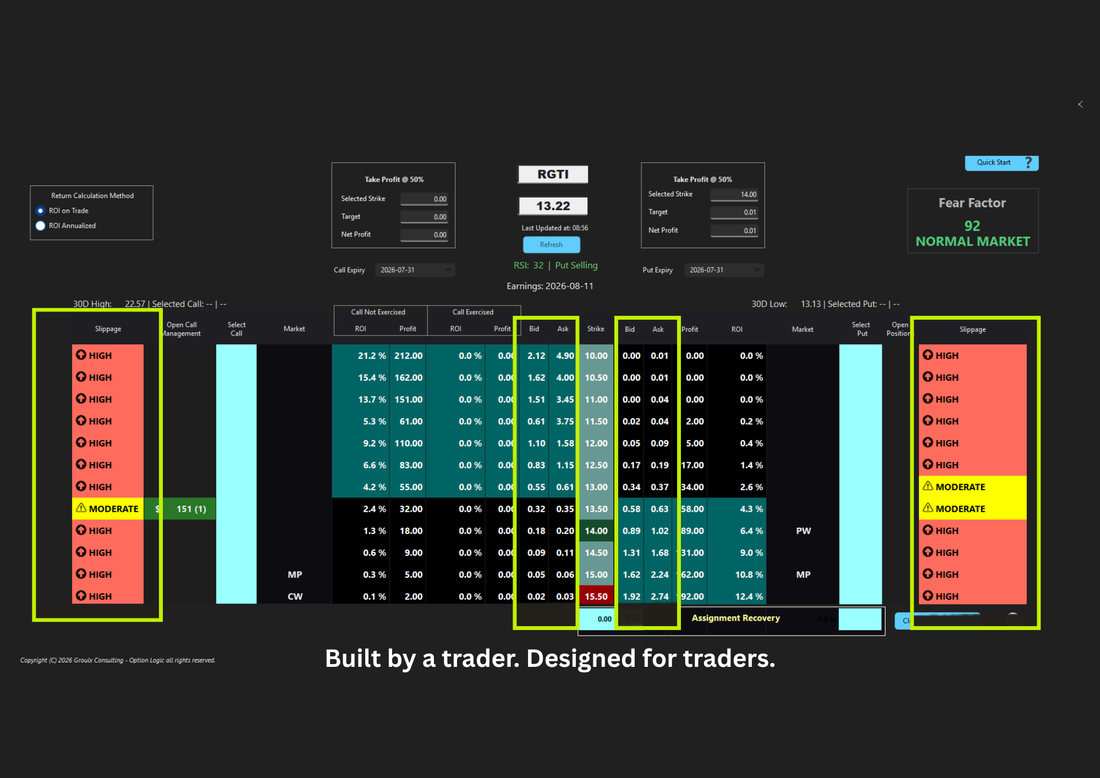
A small difference in premium can have a big impact on your actual return. That's why OptionLogic measures the bid-ask spread with its Slippage Score, helping you identify contracts that may be easier to trade efficiently.
Frequently Asked Questions
Should I always trade at the bid or ask?
Not necessarily.
Many traders use limit orders and try to trade somewhere between the bid and ask.
What is a good bid-ask spread?
Generally, a smaller spread means better liquidity and lower trading costs.
Why do some options have very wide spreads?
Less actively traded options often have fewer buyers and sellers, resulting in wider bid-ask spreads.
Does a wider spread increase trading costs?
Yes.
A wider spread can increase the difference between the price you pay and the price you receive.
How does OptionLogic help?
OptionLogic displays a Slippage Score that highlights how wide the bid-ask spread is, making it easier to compare option contracts without doing the calculations yourself.
Continue Learning