

Academy > Option Basics
What Is an Option Premium?
Academy->What is an Option Premium
One of the first things traders notice in an option chain is the premium. It's the amount of money paid by the buyer and received by the seller for an option contract. Whether you're buying or selling options, understanding premium is essential because it affects both potential returns and the cost of the trade.
Every option contract has a price.
That price is called the premium.
If you're buying an option, the premium is what you pay.
If you're selling an option, the premium is what you receive.
Understanding premium is important because it affects both the income you can earn and the cost of an options trade.
A premium is quoted per share, but one option contract usually represents 100 shares.
For example, if an option is trading for $1.25, the total premium for one contract is:
$1.25 × 100 = $125
The buyer pays $125.
The seller receives $125.
Premiums change throughout the trading day.
Some of the biggest factors that affect premium include:
- The stock price
- The strike price
- Time remaining until expiration
- Implied volatility
- Market supply and demand
As these change, option premiums change too. A higher premium isn't automatically a better opportunity. Higher premiums often come with greater risk, a higher chance of assignment, or more price movement in the underlying stock. For that reason, many traders compare premium alongside other information such as ROI, expiration, market structure, and their overall trading plan.
OptionLogic in Practice
OptionLogic displays live option premiums directly from the option chain while also calculating ROI, annualized ROI, and other metrics that help traders compare opportunities more effectively.
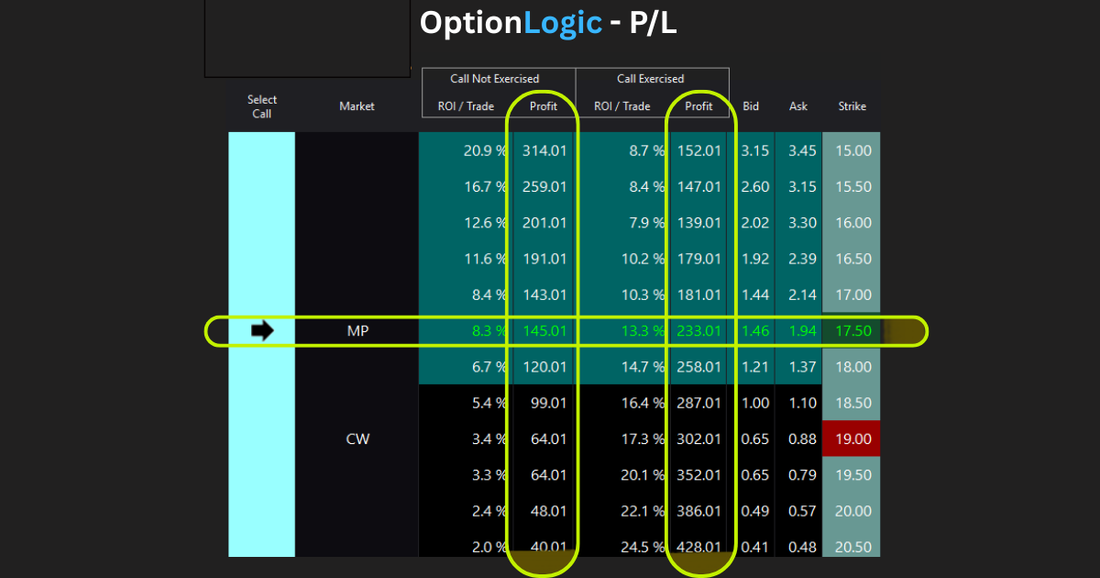
OptionLogic automatically calculates the total profit (premium) for each strike.
Frequently Asked Questions
Do I keep the premium if the option expires worthless?
In most cases, yes. If you sold the option and it expires worthless, you generally keep the premium you received.
Why do option premiums change throughout the day?
Premiums change as the stock price, time remaining until expiration, implied volatility, and market activity change.
Why do two options have different premiums?
Different strike prices and expiration dates create different levels of risk, which affects the premium.
Does every option have a premium?
Yes. Every option contract has a market price, which is its premium.
Can a high premium also mean higher risk?
Yes. Higher premiums often reflect greater uncertainty or a higher probability that the option could finish in the money.
Continue Learning