

Academy > Position Management
Current Position P/L
Academy->Current Position P/L
What Is Current Position P/L?
Current Position P/L measures the unrealized profit or loss of an open position based on the current stock price, option premiums received, fees paid, and the adjusted cost basis of the position. Rather than showing only the stock's gain or loss, it reflects how the entire position has changed through active management.
Introduction
Traditional option chains are designed to describe individual option contracts.
They display information such as:
- Bid and Ask prices
- Premium
- Open Interest
- Implied Volatility
- Greeks
- Volume
These measurements help describe the characteristics of an option. However, they do not answer an important question for traders who already own a position. "What does selling this option actually mean for my current position?"
For traders managing assigned shares or evaluating covered call opportunities, this question is often more important than the option's premium alone.
Selling a covered call changes more than the amount of premium collected.
It can affect:
- The position's unrealized profit or loss
- The adjusted cost basis
- The potential outcome if assigned
- The overall return of the position
- Future management decisions
Understanding those changes requires looking beyond the option itself. It requires looking at the position.
Current Position P/L provides that perspective. Rather than describing what an option contract is worth, it evaluates what each covered call opportunity means for the trader's existing position.
This transforms the option chain from a collection of individual contracts into a tool for evaluating position outcomes.
Why This Matters
Imagine two covered calls paying exactly the same premium. Looking only at the option chain, they appear nearly identical.
However, after considering the existing stock position, the picture changes.
One covered call may:
- Reduce the current loss significantly.
- Produce a profitable outcome if assigned.
- Improve the position's overall return.
The other may:
- Leave the position at a larger loss.
- Cap upside at an unfavourable price.
- Produce a lower overall return if exercised.
Although the premiums are identical, the outcomes for the position are very different. Traditional option chains cannot show this relationship because they evaluate contracts individually.
Current Position P/L evaluates each opportunity in the context of the existing position.
It answers a different question: "How does this covered call change the position I already own?"
That perspective allows traders to compare opportunities based on their impact on the position rather than the premium alone.
Why Traditional Option Chains Stop Too Soon
Traditional option chains are designed to describe option contracts.
They answer questions such as:
- What premium is available?
- What is the bid and ask spread?
- How much Open Interest exists?
- What is the implied volatility?
- How many days remain until expiration?
These measurements are valuable. They describe the characteristics of each option contract.
However, once a trader already owns shares, a different set of questions naturally emerges.
Questions such as:
- What happens to my position if I sell this covered call?
- How much does this premium reduce my current loss?
- What would my position be worth if the shares were called away?
- Which covered call produces the strongest overall outcome?
- How does each strike change my current position?
These questions cannot be answered by examining the option contract alone. They require understanding the relationship between the option and the existing stock position. This is where traditional option chains reach their limit.
They describe contracts. They do not evaluate positions.
Current Position P/L bridges that gap by combining the existing position with every covered call opportunity, allowing each option to be viewed through the context of the position it affects.
Rather than asking: "What is this option worth?"
Current Position P/L asks: "What does this option mean for the position I already own?"
That shift in perspective transforms the option chain from a list of contracts into a tool for evaluating possible position outcomes.
The Missing Relationship
An option contract exists independently. A position does not. Every covered call changes the position attached to it.
The premium collected...
The strike selected...
The possibility of assignment...
The remaining unrealized profit or loss...
Each contributes to the overall outcome of the position. Looking at the option by itself hides those relationships.
Looking at the position reveals them.
Current Position P/L combines those pieces into a single objective measurement that allows every covered call opportunity to be compared based on its impact on the existing position.
A Real Trading Example
Imagine you own 100 shares that were assigned through a cash-secured put. Your current position shows an unrealized loss of $420. While reviewing the option chain, you find two covered call opportunities.
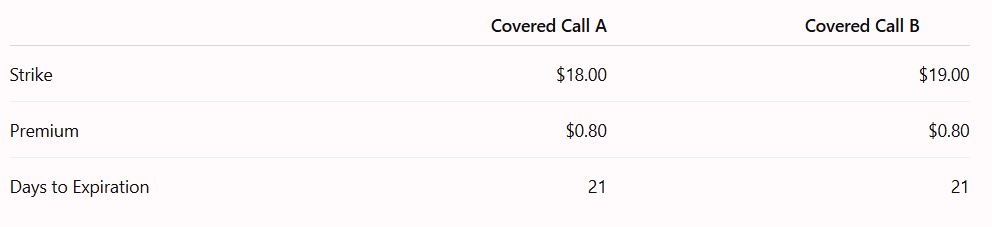
Looking only at the option chain, both contracts appear identical. They pay the same premium. They expire on the same date. At first glance, either opportunity appears equally attractive. However, once those same contracts are evaluated against the existing stock position, the picture changes.
Covered Call A may:
- Reduce the current unrealized loss more quickly.
- Produce a smaller profit if assigned.
- Leave additional upside available if the shares remain below the strike.
Covered Call B may:
- Reduce the current loss by the same premium.
- Produce a larger profit if assigned.
- Require a greater stock price increase before assignment occurs.
Neither opportunity is automatically better. Each changes the position differently. The important point is that the premium alone cannot explain those differences.
Only by evaluating the covered call in the context of the existing position can the trader understand the potential outcomes.
Current Position P/L provides that perspective by showing how each covered call affects the position you already own not just the option contract being sold.
Thinking About the Position Instead of the Contract
When traders first begin learning options, it's natural to focus on the option contract itself.
Questions such as:
- What premium does it pay?
- How many days remain?
- How much Open Interest exists?
are important because they describe the characteristics of the contract. As traders gain experience managing assigned positions, the focus often shifts.
The questions become:
- How much does this improve my current position?
- What happens if I'm assigned?
- How much profit remains after assignment?
- Which covered call best fits my management plan?
The option contract hasn't changed. The trader's perspective has.
Instead of evaluating contracts in isolation, experienced traders begin evaluating how contracts affect the positions they already own. Current Position P/L supports that way of thinking by placing every covered call opportunity into the context of the position it changes.
How OptionLogic Evaluates Current Position P/L
Traditional option chains display information about individual contracts. Current Position P/L begins somewhere different.
It begins with the position you already own. Rather than evaluating an option in isolation, OptionLogic combines the existing position with every available covered call opportunity.
For each displayed covered call, the software evaluates how that contract would affect the current position if it were sold.
This allows each opportunity to be viewed from the perspective of the position rather than the contract itself.
Instead of manually calculating multiple possible outcomes, traders can compare how different covered calls may influence:
- Current unrealized profit or loss
- Net cost basis
- Potential assignment outcome
- Position return
- Overall position management
Each covered call is evaluated using the same objective calculations, making it easier to compare how different strikes and expiration dates affect the existing position. The calculations do not determine which covered call should be selected.
They simply organize the information needed to compare possible outcomes more efficiently.
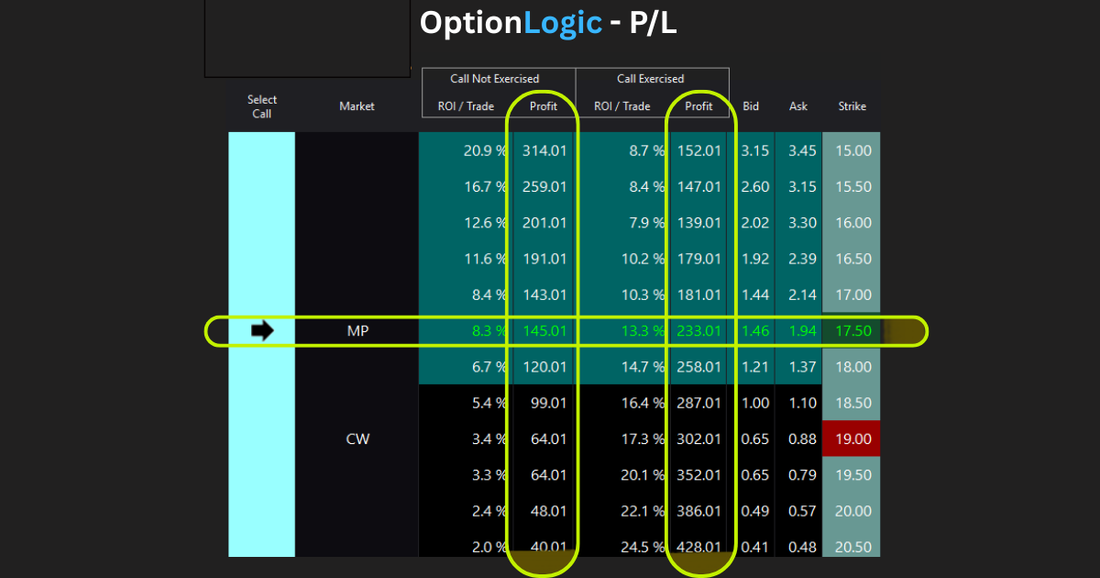 - Current Position P/L evaluates each covered call based on its impact on the existing stock position rather than the option contract alone.
Common Mistakes When Evaluating Covered Calls
Managing a covered call involves much more than selecting the highest premium. Here are several common misconceptions.
Mistake #1: Choosing the Highest Premium
A larger premium may appear attractive, but it does not necessarily produce the strongest outcome for the existing position.
Different strikes may significantly change assignment outcomes, remaining upside, and overall position return.
Mistake #2: Evaluating the Contract Instead of the Position
An option contract cannot be evaluated independently once shares are already owned. Every covered call changes the position attached to it. Understanding those changes provides a much more complete picture than premium alone.
Mistake #3: Ignoring Assignment Outcomes
Selling a covered call creates multiple possible outcomes.
The shares may remain in the account. The shares may be called away.
Each outcome affects the position differently.
Understanding both possibilities is an important part of evaluating covered call opportunities.
Mistake #4: Looking at One Measurement
Premium...
ROI...
Current Position P/L...
Each describes a different aspect of the opportunity. No single calculation fully explains how a covered call affects the existing position. Understanding comes from evaluating multiple objective measurements together.
Mistake #5: Forgetting the Existing Position
Perhaps the most common mistake is forgetting that the trader already owns shares. The covered call should not be evaluated as a new trade. It should be evaluated as the next decision affecting an existing position. Current Position P/L places that existing position at the centre of the analysis.
-The covered call is the decision. The position is what you're managing.
Key Takeaways
Current Position P/L shifts the focus from evaluating individual option contracts to understanding how those contracts affect an existing position. Traditional option chains provide valuable information about option contracts. Current Position P/L provides additional context by evaluating how each covered call changes the position you already own.
Remember these key principles:
- Option contracts describe opportunities. Positions describe what you own.
- The same premium can produce very different position outcomes.
- Every covered call changes the position attached to it.
- Understanding the position is often more valuable than evaluating the contract alone.
- Better questions lead to better understanding.
Successful position management isn't simply about collecting premium. It's about understanding how each decision changes the position over time. Current Position P/L provides that additional perspective.
How OptionLogic Helps
OptionLogic evaluates covered call opportunities from the perspective of the existing position rather than the option contract alone. For every displayed covered call, the software calculates objective measurements that help place each opportunity into context.
These include:
- Current Position P/L
- Return on Investment (ROI)
- Annualized ROI
- Assignment Outcomes
- Market Structure
- Bid/Ask Spread Analysis
- Days to Expiration
- Earnings Awareness
Together, these calculations allow covered call opportunities to be compared based on their potential impact on the existing position. OptionLogic does not determine which covered call should be sold. It organizes objective information so each opportunity can be evaluated using consistent calculations. The software provides the analysis. The trader provides the judgment.
Frequently Asked Questions
What is Current Position P/L?
Current Position P/L shows the current unrealized profit or loss of an open position. It reflects how the position is performing based on the latest market price and the adjustments made through option premiums and fees.
Why is Current Position P/L different from my broker's unrealized P/L?
Many brokers primarily display unrealized profit or loss based on the stock price alone. Current Position P/L also considers option premiums collected, fees paid, and adjustments to your cost basis, providing a more complete view of the position.
Does selling covered calls affect my Current Position P/L?
Yes. Premium collected from covered calls changes the position by reducing the adjusted cost basis. This means every covered call can improve the overall position, even if the stock price remains unchanged.
Is Current Position P/L the same as realized profit?
No. Current Position P/L reflects the current value of an open position. Realized profit or loss is determined only after the position has been fully closed or the shares have been called away.
Why should I monitor Current Position P/L?
Current Position P/L helps traders understand how their position is evolving over time. Instead of focusing only on the stock price, it reflects the combined impact of stock value, option income, and position management.
How does OptionLogic calculate Current Position P/L?
OptionLogic calculates Current Position P/L by combining the current market value of the shares with your adjusted cost basis, option premiums received, and applicable fees. This provides a more complete picture of how the position is performing than looking at the stock price alone.
Continue Learning